

MIT researchers combine modular folded cells, computational design, and digital fabrication to create lightweight structures that use less material and require simpler assembly.
MIT researchers have developed an origami-inspired construction technique for creating lightweight, rigid structures at architectural scale. The modular approach turns flat sheets into folded building blocks that connect to form load-bearing shells without interior support columns. Potential applications range from rapidly deployable disaster shelters to aerospace components, building facades, acoustic panels, and modular robots.
The system draws inspiration from folded tessellations developed by artist and scientist Ron Resch in the 1960s. Instead of folding an entire structure from a single sheet, the MIT team creates individual polygonal units. Two tripod-shaped cells are combined into a building block with zero degrees of freedom, making it rigid once folded. These modules connect into networks of interwoven beams that provide high stiffness while minimizing material use.
Designing hundreds of different cells manually would be impractical, so the researchers developed an automated computational solver. It divides a desired structure into smaller design problems and determines manufacturable, foldable cells for each section. The resulting digital files can be sent to CNC milling machines, which cut the components from flat materials such as aluminum.
Assembly is intentionally straightforward. Workers fold the pieces and connect them using hand tools, eliminating the need for large-scale welding equipment. Each cell is designed to naturally settle into its correct configuration. Simulations showed that structures produced with the method can be about 3.5 times stiffer than those created using some other structural-origami techniques while consuming roughly two-thirds as much material.
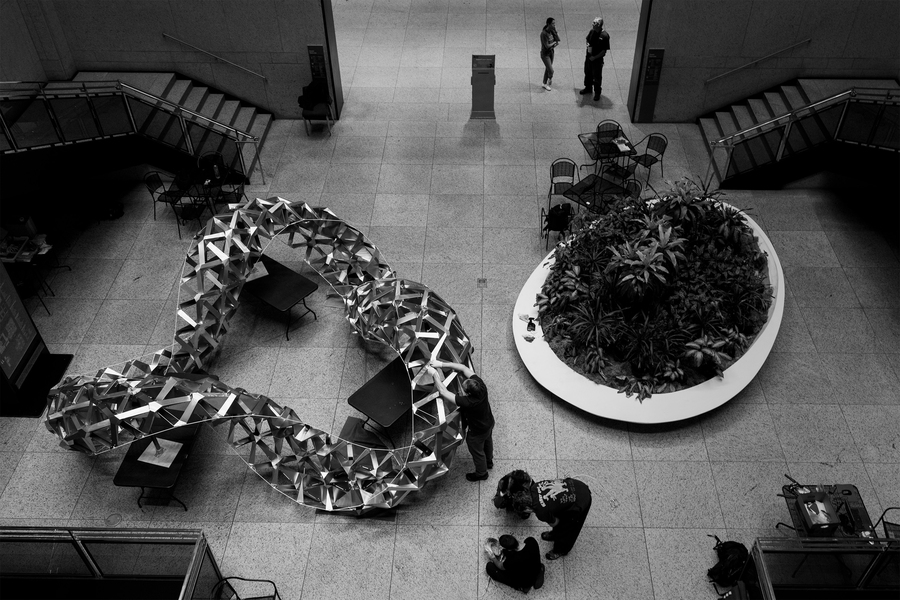
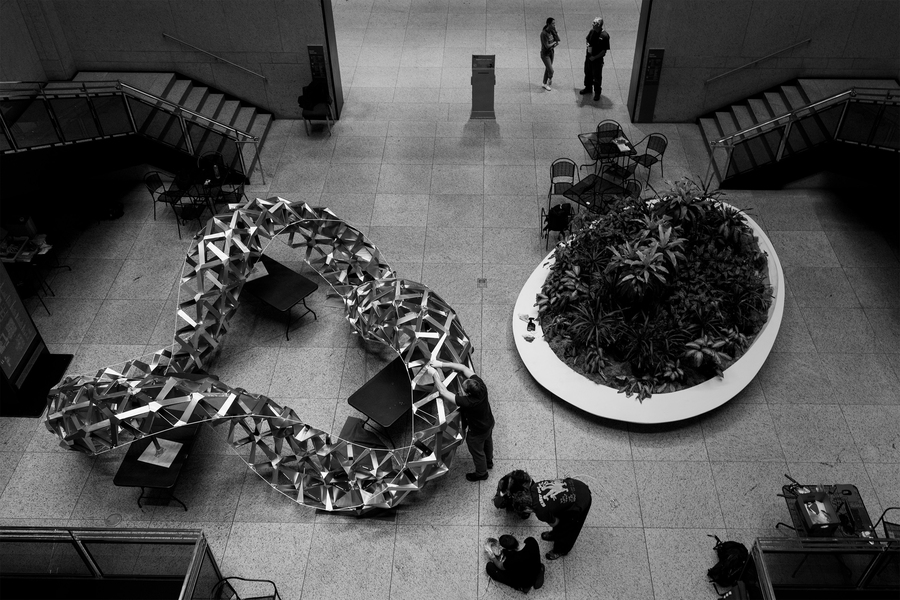
To demonstrate scalability, the team constructed Lexicon, a 23-foot folded-aluminum sculpture installed at the Boston Public Library. A team without professional construction experience assembled it within days. The researchers now plan to test larger architectural structures, investigate more complex cell geometries, and develop a user-friendly design interface, potentially bringing digitally designed structural origami from laboratory prototypes to construction sites.
