

Targeted cleaning efforts help utilities focus maintenance where they deliver the greatest impact, moving from calendar-based decisions to data-driven resource management.
El Paso, Texas, is one of the largest cities along the U.S.-Mexico border, serving a population of more than 680,000 residents. Its wastewater collection system includes approximately 2,450 miles of gravity and force main sewer lines, 75 lift stations and roughly 44,000 manholes.
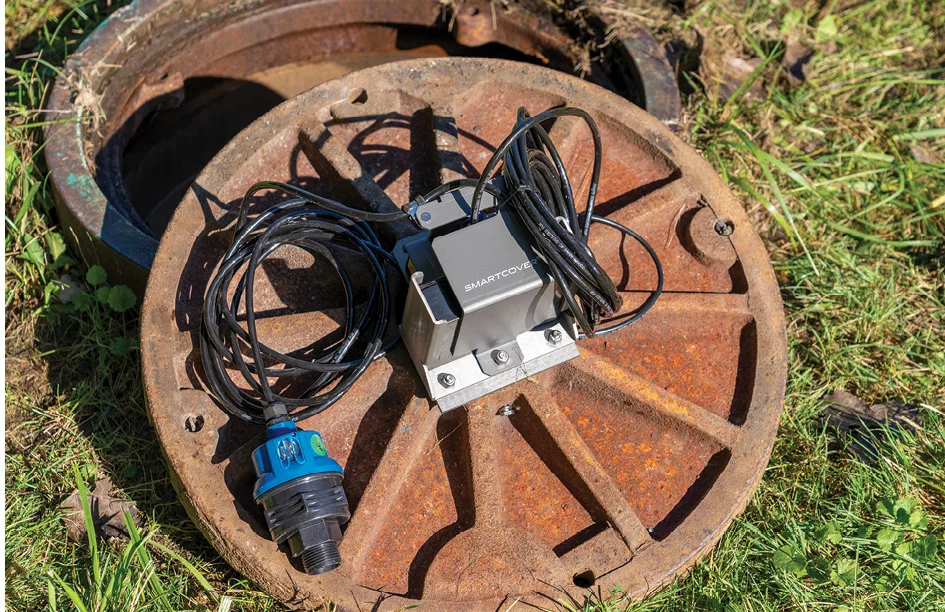
Smart sensors deliver real-time, remote collection system monitoring data for wastewater and sewer-level tracking.
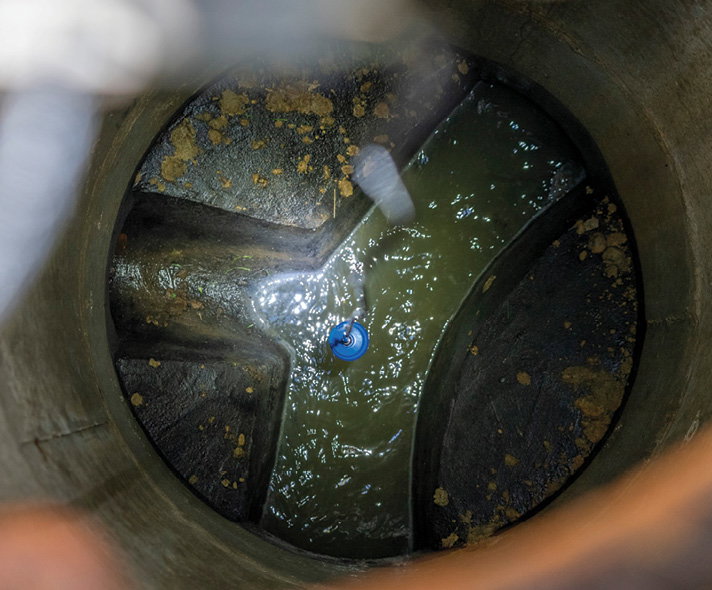
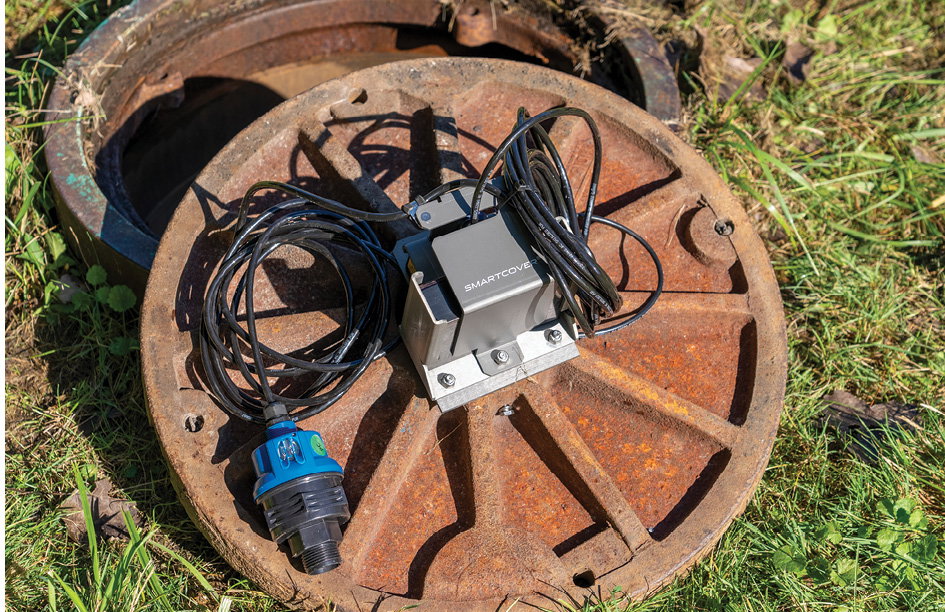
This surface-mounted sensor installation tracks liquid levels via targeted location monitoring to prevent sewer overflows.
The utility, El Paso Water (EPWater) is responsible for providing water and wastewater services to approximately 220,000 residential, commercial and industrial customers. Four wastewater treatment plants process an average of 58 million gallons per day.
As the city continues to grow, EPWater faces increasing pressure to maintain reliable collection system operations, reduce environmental risk and make informed infrastructure investment decisions. To support these goals, the utility adopted a data-driven approach to managing its wastewater system.
EPWater’s wastewater crews were responsible for balancing routine maintenance activities with efforts to reduce inflow and infiltration (I&I), prevent sanitary sewer overflows (SSOs) and manage system performance. Much of this work relied on the utility’s Capacity, Management, Operations and Maintenance program, which required frequent cleaning and inspection of locations identified as high risk; even when unnecessary.
While effective, the process was labor intensive, requiring crews to perform maintenance based on predetermined schedules rather than actual system conditions. Staff also spent considerable time locating and addressing I&I sources and clearing blockages in the wastewater network.
Spikes in hydrogen sulfide (H₂S) gas levels and accelerated corrosion within portions of the wastewater collection system further challenged utility field crews. Temporary mitigation measures were costly, and while they addressed immediate concerns, did little to address the root cause of these challenges. With limited visibility into conditions across the broader network, utility staff recognized the need for lift station backup and data analytics that could help move EPWater toward proactive operation and management of its sewer network.
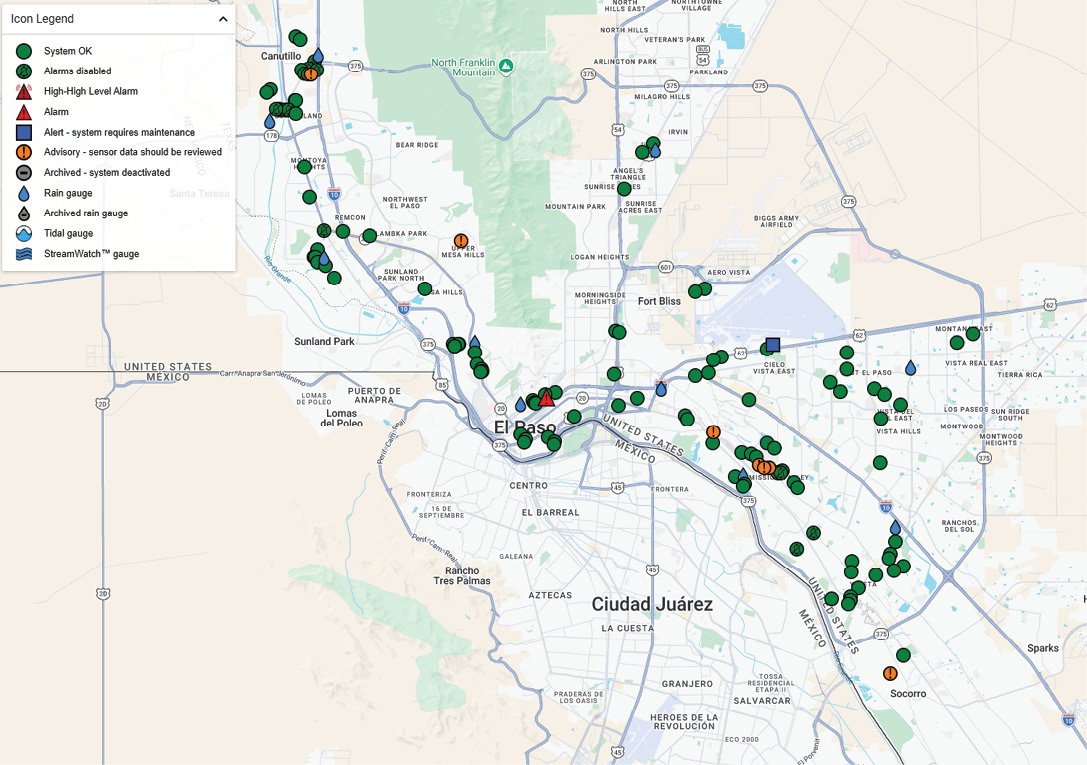
Smart sensors currently deployed across EPWater’s network have improved utility response times with real-time data, analytics and reporting
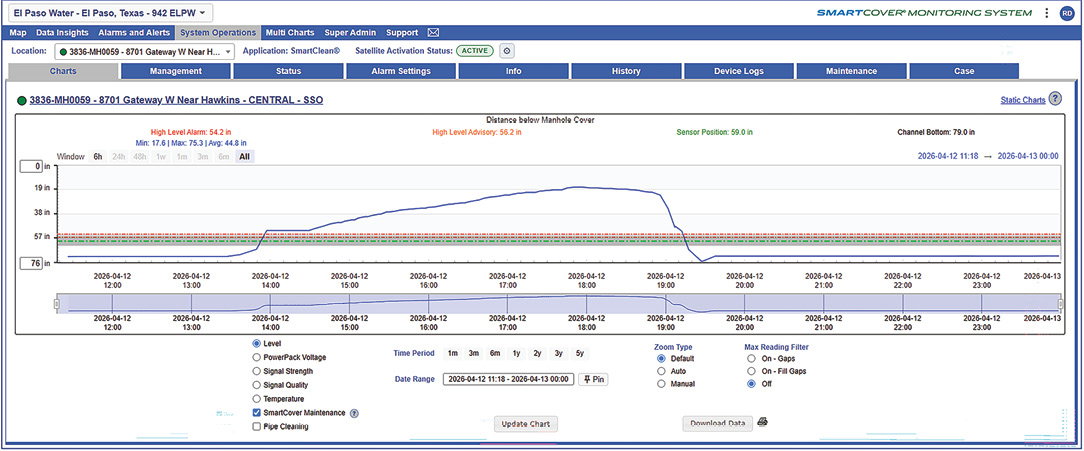
Early warning alerts identified abnormal flow conditions, enabling field staff to take proactive action. The resulting maintenance activities helped avert a sanitary sewer overflow.
Continuous Insight
EPWater implemented a network of monitoring and analytics technologies throughout its wastewater collection system. The solution provides continuous insight into wastewater levels, flow conditions, rainfall impacts and H₂S concentrations at critical locations.
Continuous, remote monitoring enables operations staff to assess emerging issues and respond before conditions escalate into larger operational problems. Automated alerts provide early warning of changing conditions, helping crews prioritize field activities and focus resources where they’re needed most.
The monitoring devices are installed within existing infrastructure and can be relocated as needed, allowing the utility to evaluate conditions across the collection system. Collected data support daily operational decisions as well as long-term planning efforts, including maintenance prioritization, corrosion management efforts and capital improvement planning.
Pilot First, Then Broader Adoption
EPWater first evaluated smart sewer technology through a pilot program in 2023. By implementing flow and level monitors, H₂S measurement tools and cleaning program analysis, the utility reduced high-risk cleaning activities by 93 percent, helping crews focus on areas requiring attention rather than performing maintenance based solely on routine schedules. During 2024, the utility also prevented nine SSOs through earlier detection of developing issues and more proactive response efforts.
Additional benefits, including improved response times, greater flexibility through re-deployable monitoring equipment and enhanced insight into overall system performance with analytics and reporting led
to a broader adoption of these solutions across EPWater’s network.
Today, EPWater has shifted from reactive, labor-intensive wastewater management toward a proactive, data-driven approach. By leveraging real-time measurement and monitoring, the utility has significantly improved operational efficiency, reduced unnecessary maintenance, minimized corrosion and enhanced community satisfaction by addressing odor complaints more effectively.