

Pirros explains the progression from schematic design through construction administration and shows where AI can help firms reuse details, check documentation, and automate repetitive Revit work.

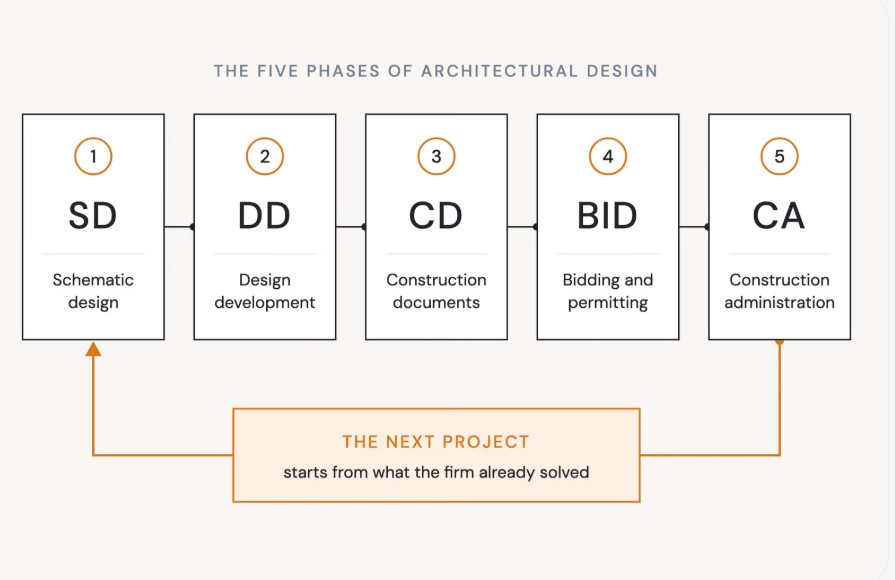
Architectural projects in the United States typically move through five design phases defined by the American Institute of Architects: schematic design, design development, construction documents, bidding or negotiation, and construction administration. Pirros argues that managing the information created across these stages can help architecture and engineering firms avoid repeatedly solving the same problems.
Schematic design establishes the project’s fundamental concept, scope, spatial relationships, and initial cost estimate. Architects evaluate factors such as zoning and code requirements while defining structural and envelope strategies. Design development then turns the approved concept into a coordinated design, establishing materials, assemblies, dimensions, and structural, mechanical, electrical, and plumbing systems.
Construction documents translate these decisions into detailed instructions that contractors can price and build. Plans, elevations, sections, schedules, and construction details must remain coordinated, making quality checks particularly important. During bidding and permitting, contractor questions, substitutions, and plan-review comments can trigger further revisions. Construction administration follows during the build, when architects answer RFIs, review submittals and shop drawings, assess change orders, conduct site visits, and document lessons from construction.
A recurring problem across these phases is lost institutional knowledge. Teams may redraw existing details, allow design-development decisions to drift during documentation, manually implement late changes, or fail to incorporate lessons from construction into future standards. Pirros recommends reusing proven details, defining deliverables clearly, conducting quality reviews at intermediate milestones, and feeding construction feedback into firmwide standards.
AI plays a practical role in Pirros’ proposed workflow. Its platform makes details and Revit families from previous projects searchable, while Quality Management checks documentation against codes, project specifications, and company standards. Mira, Pirros’ AI agent for Revit, can automate repetitive tasks such as renumbering details, replacing text across drawings, and auditing views against standards while requiring user approval before changes are made.
