

Nomic and Arcadis show why faster automated project reviews still depend on senior engineers who can verify findings and take responsibility for decisions.

Artificial intelligence can dramatically accelerate engineering reviews, but faster analysis does not eliminate the need for experienced engineers. AEC Magazine examines this emerging constraint through Nomic’s work with global design and engineering firm Arcadis, where AI is being used to review drawings, specifications, models, tenders, and submittals.
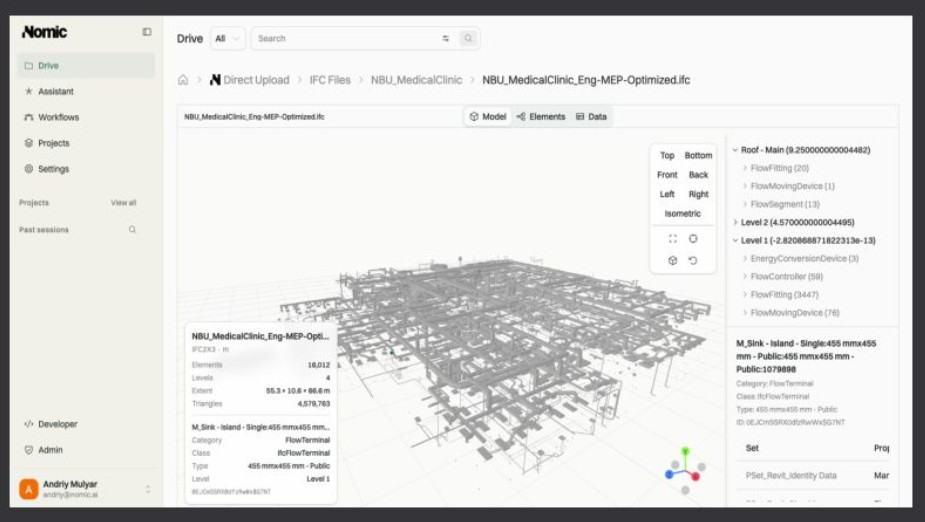
Nomic performs a first pass through project information and links findings to their sources. This can reduce the time engineers spend searching through thousands of pages for relevant requirements. Yet Arcadis emphasizes that AI outputs cannot be accepted automatically. Engineers still determine which findings matter and remain responsible for final decisions.
Arcadis tested Nomic with 150 participants across 12 countries for six months. According to the company, 86% said the software changed their approach to work. Nomic has since become enterprise software available within Arcadis, reaching nearly 500 licensed users and more than 750 created workflows.
Submittal review is emerging as an important application. AI agents can compare proposed equipment or materials against project requirements scattered across drawings, specifications, and supporting documents. Nomic is also exploring agents that monitor connected project information and initiate reviews before engineers manually request them.
This automation creates a new problem. If agents generate reviews faster than senior engineers can verify them, the bottleneck simply moves to the engineer’s desk. Overnight automation does not create additional time for human review the next morning.
Accuracy therefore matters more than raw processing speed. Poorly prioritized findings could consume the time automation was intended to save, while well-supported issues linked directly to drawings and requirements can reduce overall workload.
The article argues that firms should measure the complete review cycle, including verification, correction, and approval. AI becomes valuable engineering automation only when it reduces the effort required for engineers to confidently sign off the final result.