

Pirros explains why BIM management extends beyond model coordination to maintaining Revit standards, controlling content, supporting teams, and using AI to reduce repetitive cleanup.
BIM management at architecture and engineering firms involves two closely connected responsibilities: maintaining firmwide standards and managing BIM processes on individual projects. A BIM manager typically oversees Revit templates, families, typical details, drawing standards, training, software upgrades, and technical support. At the project level, the role expands to BIM execution plans, model setup, consultant coordination, clash detection, model health, and final deliverables.
Pirros argues that this broad responsibility creates a persistent problem. BIM managers often become the central help desk for standards-related issues. Project teams may reuse old projects instead of current templates, create duplicate families and styles, redraw existing details, or continue using outdated standards. Valuable knowledge can also disappear when experienced employees leave. These problems consume time that BIM managers could spend improving firmwide processes.
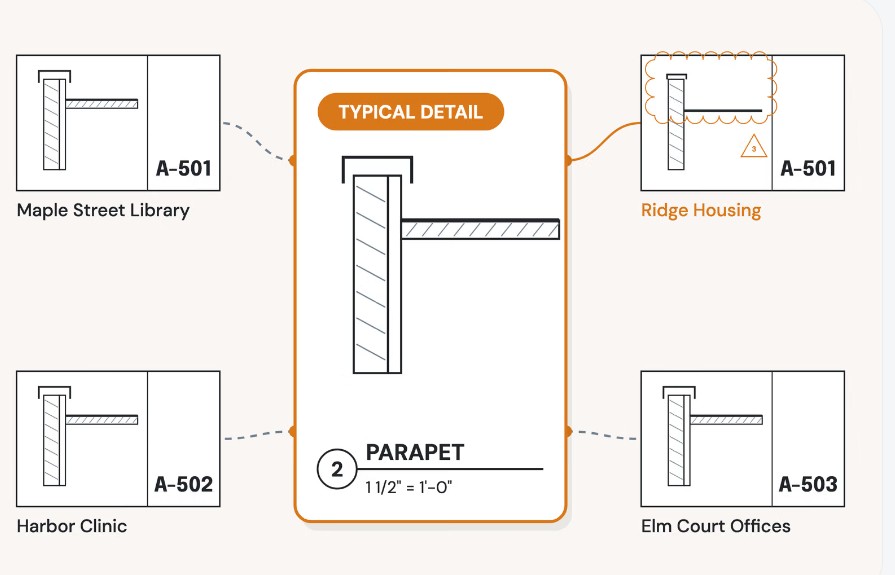
The article recommends treating BIM standards as a continuous loop rather than a static library controlled by one person. Firms should distinguish approved typical details from project-specific details, allow good project work to become new standards, maintain one approved version of each family, communicate revisions to active projects, and conduct regular model checks. Standards should also be easy to find within designers’ everyday workflows.
Pirros positions its platform as a way to support this approach. It makes Revit details and families searchable, prioritizes approved content, tracks usage, and lets designers propose project content for standardization. The company says David Baker Architects expanded its standards library by 700 percent using this workflow.
AI also plays a practical role. Pirros’ Mira AI agent works inside Revit to perform repetitive standards tasks, such as identifying duplicate line or dimension styles and renaming drafting views. Importantly, Mira requests user approval before making changes. The goal is to reduce routine cleanup so BIM managers can concentrate on standards, quality, and firmwide consistency.
