

Pirros explains the engineer’s role in steel detailing, connection design, shop drawing review, and the use of AI to manage repetitive Revit documentation.

Steel detailing transforms a structural engineer’s design into the information fabricators and erection crews need to manufacture and assemble a steel frame. Pirros explains the process from the engineer of record’s perspective, focusing on responsibilities, connection requirements, approval documents, and ways to reduce errors during the handoff to fabrication.
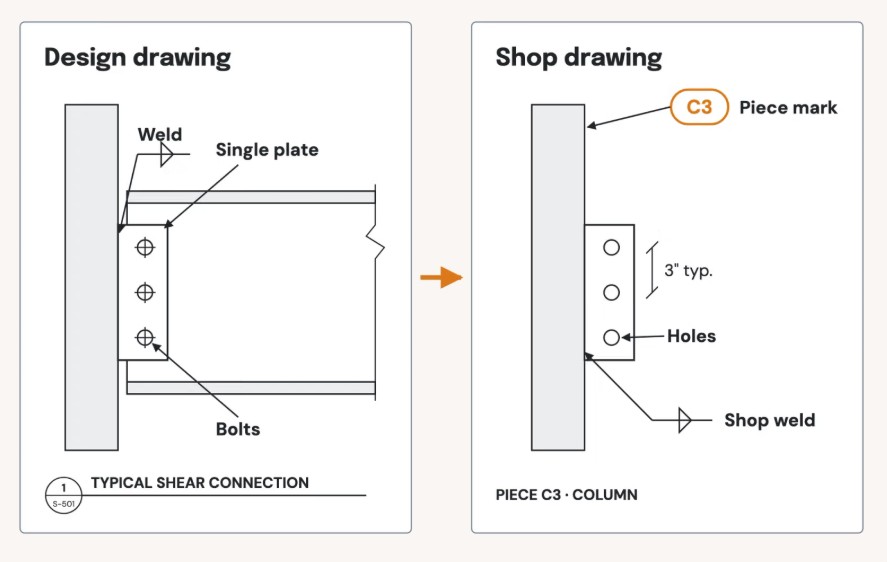
Detailers typically create a 3D fabrication model using software such as Tekla Structures, SDS2, or Autodesk Advance Steel. From this model come shop drawings showing individual pieces, erection drawings defining their field locations and connections, embedment drawings, bills of material, and other fabrication information. The engineer of record reviews these documents before fabrication begins.
A key decision involves steel connections. Under ANSI/AISC 303-22, engineers must designate one of three approaches for each connection. They can provide the complete design, allow an experienced detailer to select or complete it using supplied criteria, or delegate the design to a licensed engineer working for the fabricator. Even when connection design is delegated, the engineer of record remains responsible for providing necessary design criteria and approving the result.
Accurate design documents are therefore critical. Member sizes, material grades, geometry, elevations, lateral systems, connection requirements, and reinforcement should be clearly specified. Missing dimensions or conflicting notes can generate RFIs and potentially costly changes after steel has been ordered.
Pirros also highlights inefficiencies caused by repeatedly recreating common connections and reusing outdated details. Its detail-management platform lets engineering firms search previous work and maintain approved standard details.
AI adds another layer of automation. Pirros’ Mira agent works inside Revit to perform repetitive documentation tasks, including renumbering details, updating superseded specifications across drawings, and rebuilding old CAD details as Revit details. Importantly, Mira previews proposed changes and waits for engineer approval before modifying the model.
The article’s central message is practical: clear design information, disciplined detail management, and controlled automation can make the transition from structural design to steel fabrication more consistent and efficient.