

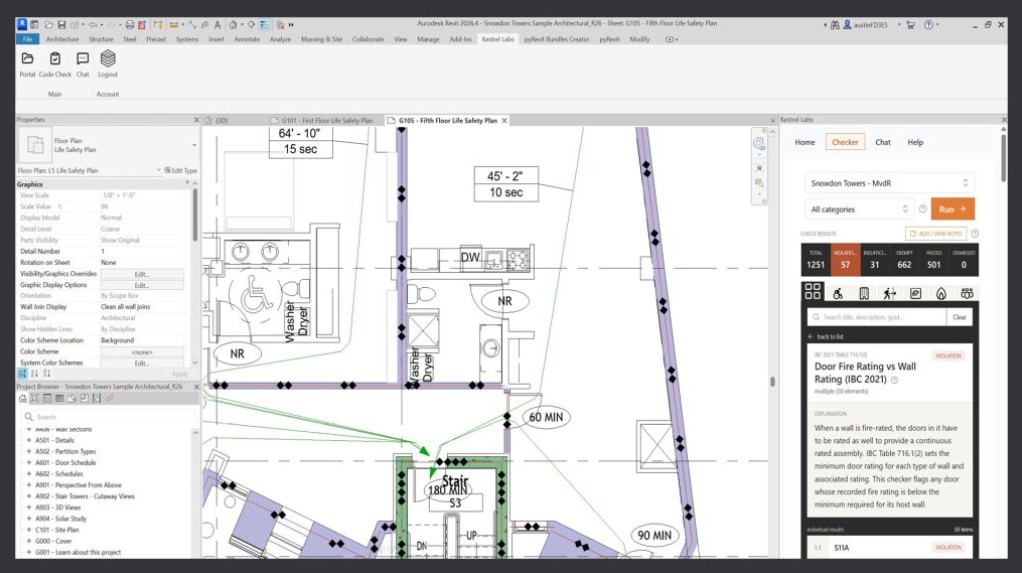
A growing class of software can check drawings, models, and project requirements automatically, but professional judgment and documented human review remain essential.

Compliance software is becoming a significant category in AEC technology. According to AEC Magazine, the market has expanded from a handful of products two years ago to at least 19 tools. AI is accelerating that growth by allowing software to read drawings, models, and written regulations directly instead of requiring regulations to be manually converted into machine-readable rules.
Compliance, however, extends beyond building regulations. Projects must satisfy statutory rules, contractual obligations such as Employer’s Requirements, client briefs, and internal practice standards. The article stresses an important distinction between prescriptive and performance requirements. AI can effectively check measurable criteria such as dimensions, U-values, specified products, naming conventions, and schedules. Performance requirements, including whether a building provides adequate means of escape, still require modeling, professional judgment, and competent human approval.
The technology could alter where checking occurs. Architects can use it before issuing information, while contractors can examine consultant packages, identify discrepancies, and raise RFIs. Clients could independently compare deliverables with briefs and regulations. Building Control organizations may eventually use similar systems. This makes internal checking increasingly valuable because errors could otherwise be discovered by external stakeholders.
AEC Magazine recommends combining automated first-pass checking with detailed human review. Software can identify straightforward problems across hundreds of drawings, allowing experienced professionals to concentrate on consequential issues. Maintaining an auditable record of findings, decisions, responsible individuals, and resolutions could become as important as detecting problems.
Selecting a compliance platform should therefore involve more than comparing features. Firms should examine jurisdictional coverage, update frequency, auditability, data storage, and vendor longevity. Testing software against a completed project with known problems can reveal what the system misses.
Automated checking is likely to become commonplace, but the article draws a firm boundary: software can strengthen compliance workflows, not assume professional responsibility.
